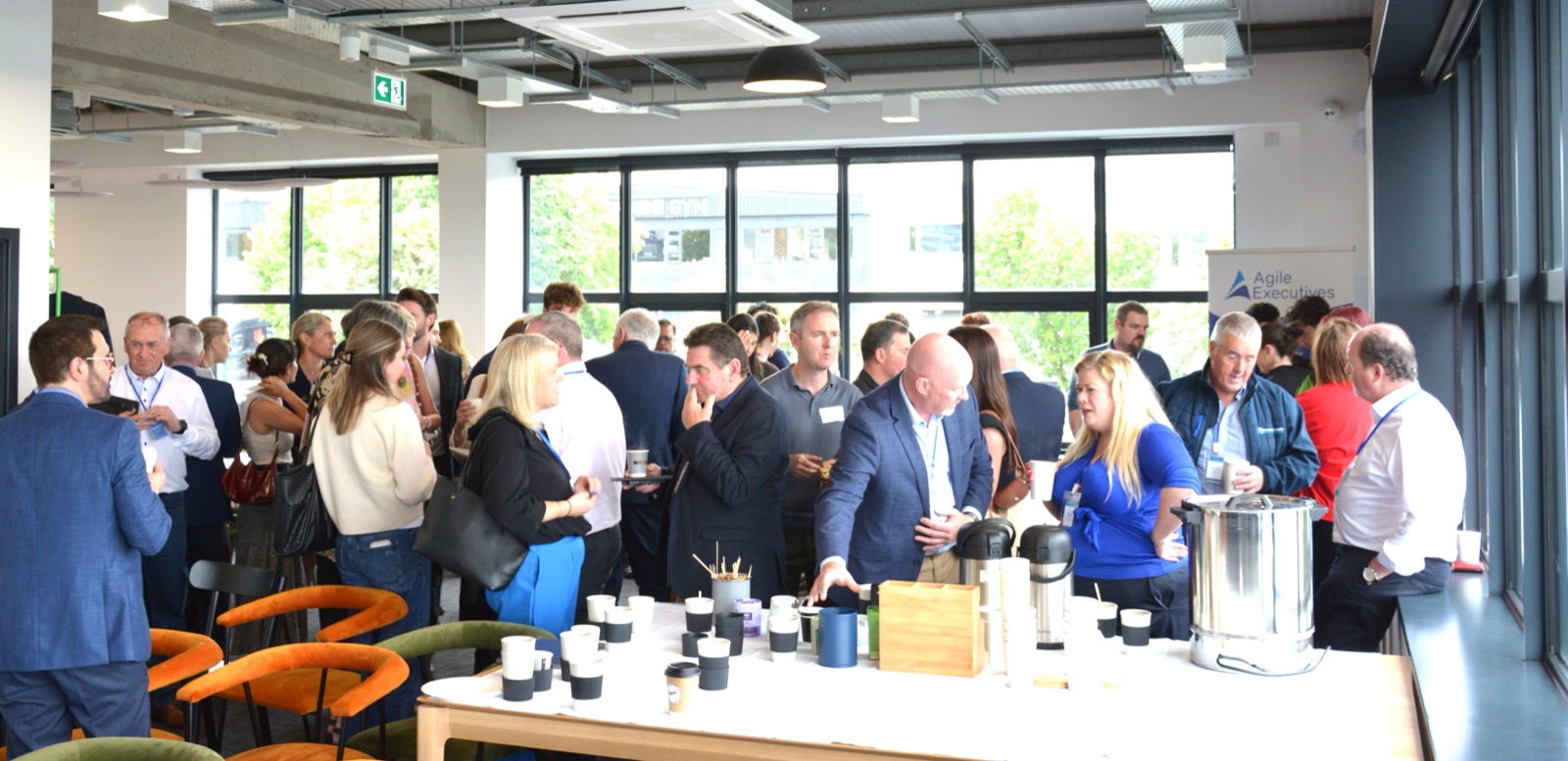
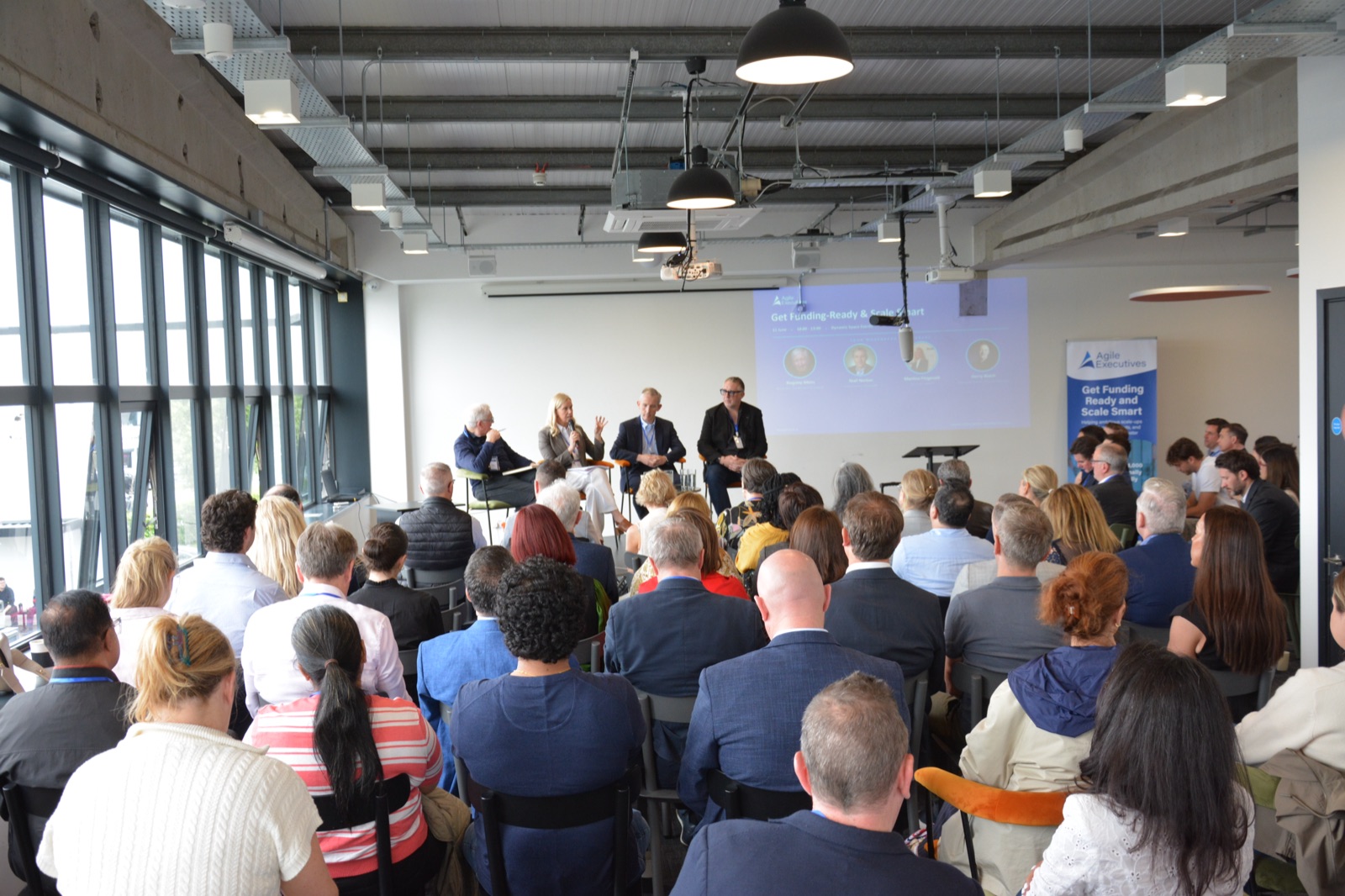
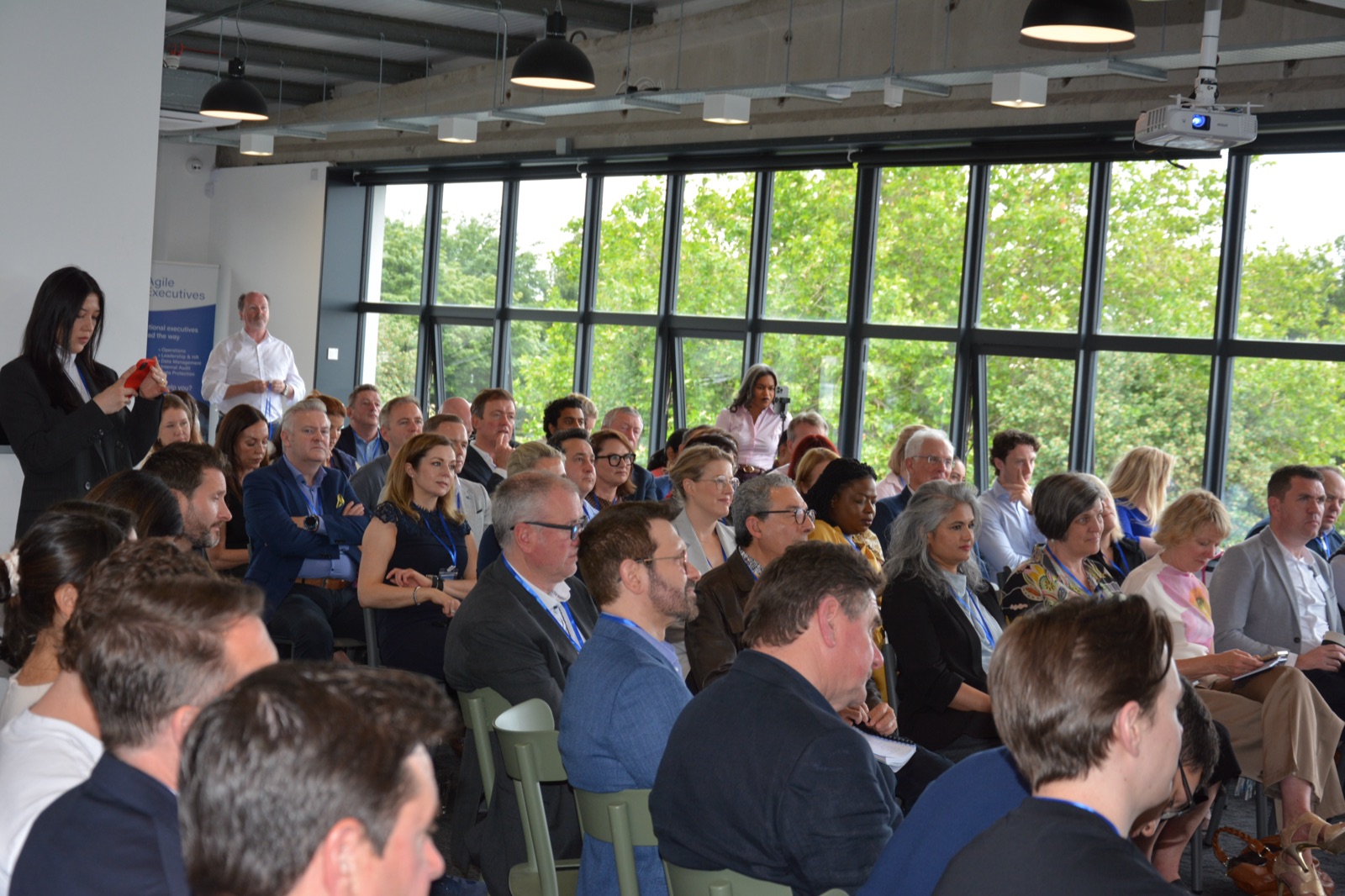
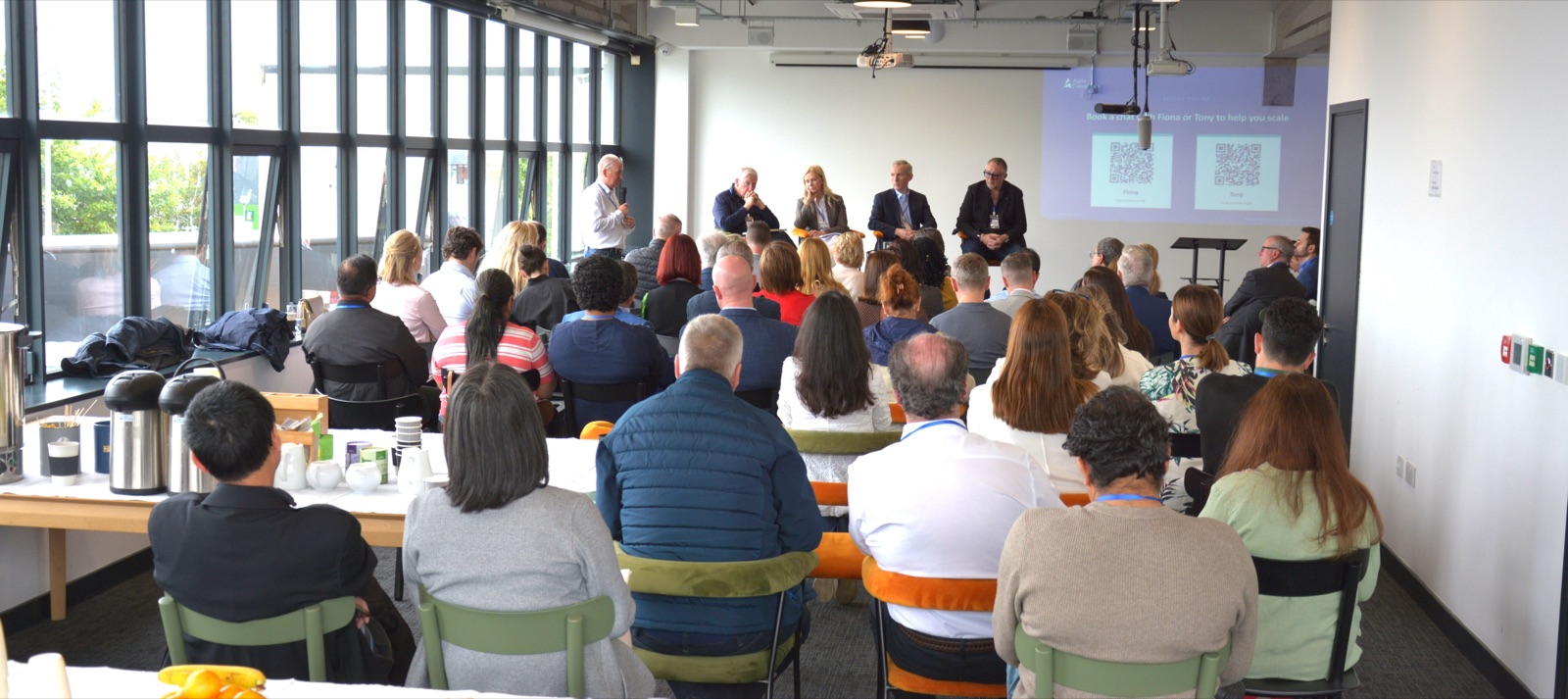
On Thursday 11 June, we filled a room in Dublin with well over 100 founders and leaders of scaling Irish companies for our June panel, run in partnership with FinanceFair. The networking alone was worth the trip, and on the day we were already helping founders identify grants and supports they qualify for, and the right routes to fractional leadership.
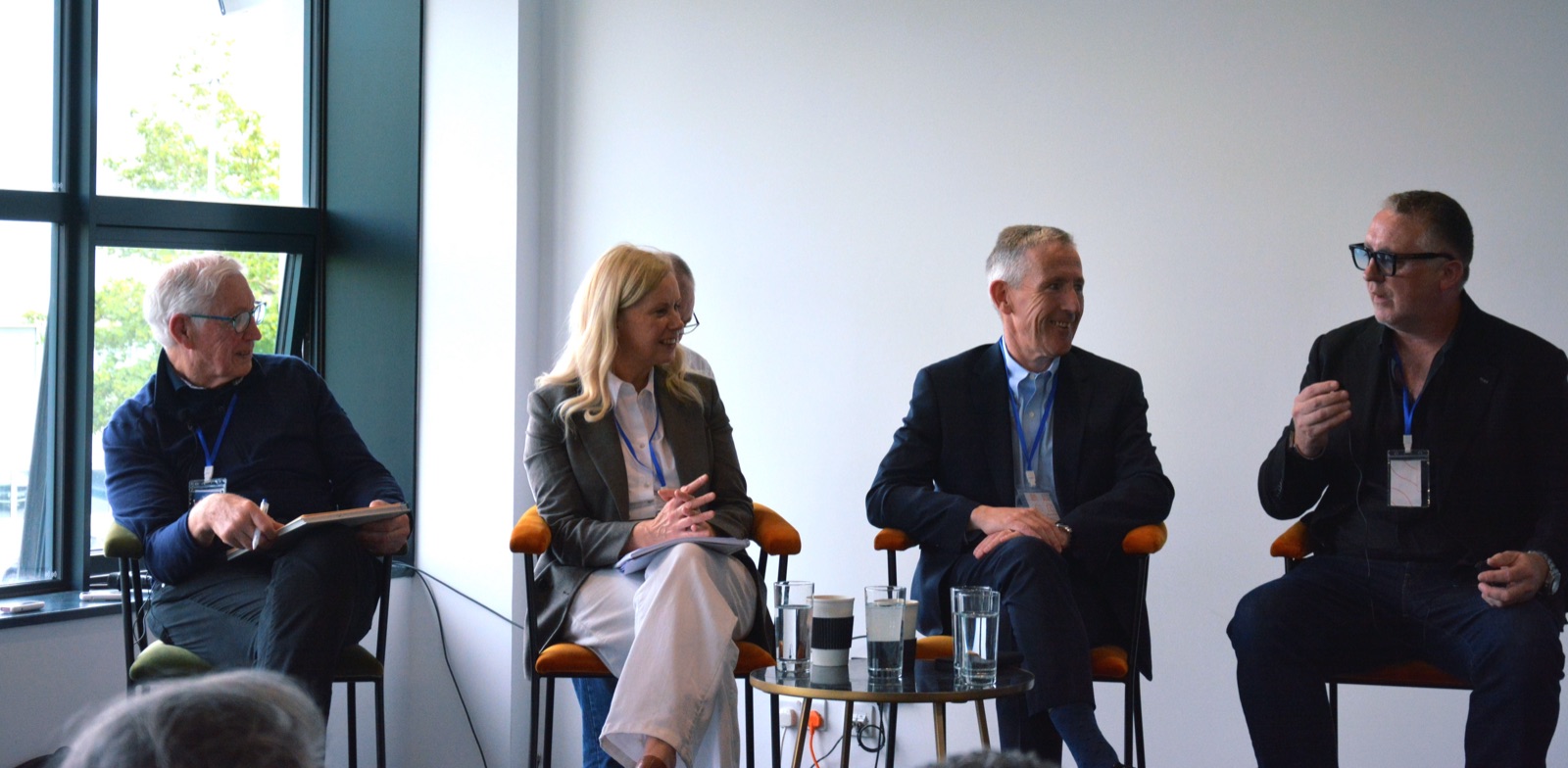
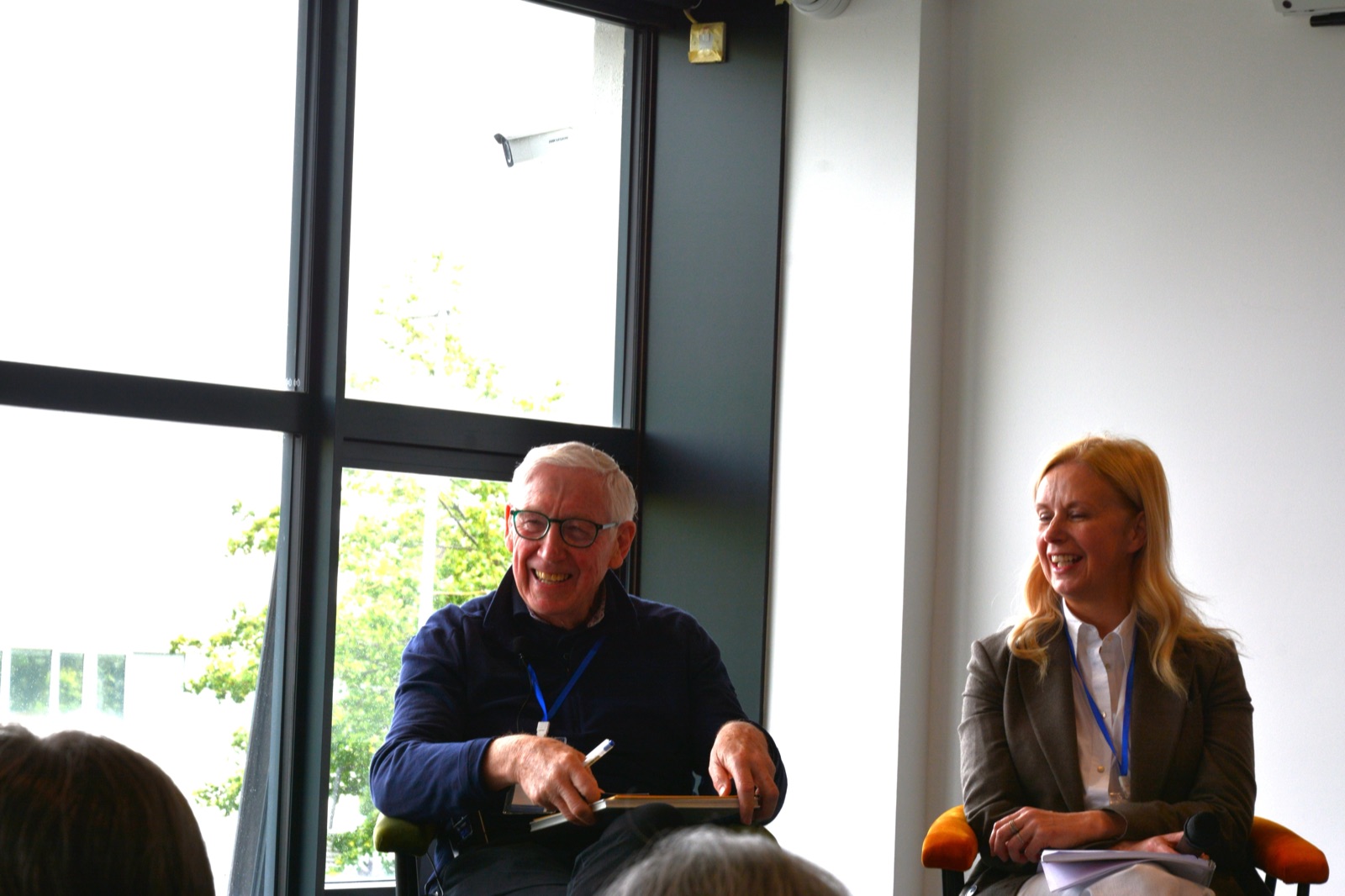
Our managing director Tony Dignam opened and closed the event with a simple, open offer to everyone in the room: if you are wrestling with scaling, grants and supports, skills gaps, or anything in between, come and talk to us. Kingsley Aikins moderated, and Gerry Walsh, Niall Norton and Martina Fitzgerald shared three very different paths to building a company that lasts. If you could not make it, here is what you missed, and what to do with it.
Marginal gains, and the two words that run a career
Kingsley opened with Sir Dave Brailsford and British Cycling. Break the work into every small part, improve each by one percent, and the gains compound. A team with no wins for a century took 16 medals at the London Olympics, and the same thinking delivered five Tours de France in six years. The lesson for founders is that scale is rarely one big move. It is a hundred small ones done well.
His second theme framed the whole morning. Life, he argued, comes down to two words: other people. Every promotion, every raise, every deal needs someone else to say yes. Connections, relationships and networks are not soft extras. They are the route to the goal.
The network is the capital
Gerry Walsh left school at 15, found his way to engineering, then to fitting out department stores in New York. He built Dynamic Resources with a partner into a global brand and retail installation business spanning four continents and more than 10,000 projects, across more than 30 years, without raising a euro of outside capital.
His model was simple and hard to copy. He used the network itself as capital. Partners funded their own work and he paid them when he got paid. He pays suppliers fast, sometimes before his own clients pay him, because trust compounds. He expanded into Europe during the financial crisis with, in his words, a pen and no contacts, and built a network advantage while competitors were consolidating. His rule for winning work still holds: give me the thing nobody else wants to do, and do it well. The team today spans 43 nationalities and 23 languages, and he has just brought in an external CEO to carry the business into its next chapter while he mentors the next generation.
Build the business first, then raise
Niall Norton scaled Openet from a small Irish software firm into a global telecoms business, through six rounds of equity, lawsuits, and operations across Ireland, Malaysia and the United States, to an acquisition in 2020. His message to anyone thinking about a raise was grounded.
A good idea is no longer enough. Today investors want a real business with paying customers and a growth trajectory, prepared so it looks less risky and more attractive. A single point of failure, one founder carrying everything, kills a fundraise, so build a team around the business early. And set goals that scare you a little. If you are comfortable, he said, you did it wrong. He would rather be rated eight out of ten on a goal that matters than five out of five on one that does not.
He also made the case for pride in the work. A chance conversation during a four hour delay at Singapore airport turned into a major deal, and a delivery his team completed in 13 weeks that a competitor had quoted at a year. Pride in your work, he said, decides whether you win or lose.
The funding picture, from inside the ecosystem
Martina Fitzgerald, CEO of Scale Ireland, gave the room an honest read on the landscape. Funding has been the number one issue in Scale Ireland's annual founder survey for five years running. Around three quarters of founders still find it difficult or very difficult to raise, and the hardest stretch is the three to ten million euro round, the wall where many promising companies stall.
There is movement. The Government has named a one billion euro scaling finance gap it intends to close over the next three to five years. Enterprise Ireland is repositioning the indigenous sector as a primary driver of the economy, with a target of 13 large Irish exporting companies by 2029. Earlier stage debt support is coming through ISIF, with a preference for transformative technology.
Martina was just as clear about the supports founders already have and do not use. More than half are not claiming the R&D tax credit, now worth 35 percent, despite two recent rate increases. Around nine in ten are not using share options, and the tax treatment still makes them far less attractive than schemes in many other European countries. She also pointed to the prize sitting in Irish pension funds: Denmark unlocked 14 billion euro for venture and scaling companies, and even one percent of Irish pension savings directed the same way would change the picture.
From the floor
The questions were as sharp as the answers. A few themes carried real weight.
AI is changing how relationships are built, not replacing them. Mass email is losing its power the way the internet once ended cold door-knocking, and the leaders who win are returning to human, trust-led relationships. Compliance came up as a genuine barrier for fintech and medtech founders, with calls for clearer accreditation and a more open regulatory sandbox. And on talent, the room agreed that share options are the main lever to pull people out of multinationals and into building, but only if the tax treatment improves.
On disagreement inside founding teams, Niall offered the most quoted line of the day. He and his co-founder disagreed almost weekly for 20 years, and it worked because the challenge was never about ego, only ever about growing the company.
Ego, he said, kills businesses quicker than anything else.
What it all came back to
Kingsley closed by pulling the threads together. Adaptability to change is now the defining skill. Any edge built on technology alone is eroding, while network and trust are durable. Proof of concept is no longer enough to unlock funding, you need paying customers. And as inboxes fill with automated noise, shoe leather still wins. Get out, meet people, and build the customer base before you go looking for capital.
Tony Dignam closed as he opened, with an open hand. Whatever the challenge, scaling, grants and supports, or a skills gap on the team, the offer to talk it through stands. A warm thank you to Gerry Walsh, who welcomed us to Dynamic Space, his event venue in Dublin. If you are looking for somewhere to host your own event, take a look.